Teams | Collaboration | Customer Service | Project Management

Remote Work Acceptable Use & Employee Monitoring Policy Template (2026 Guide): Free Sample for IT Leaders

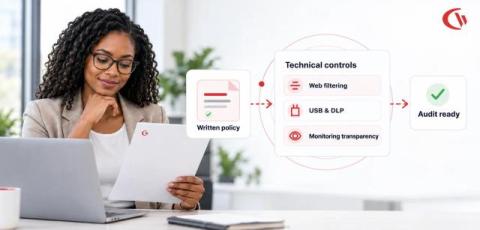
Just providing employees with laptops and VPNs will not be sufficient for protecting a distributed workforce in 2026; IT managers will also have to put in place a framework, that is, a written agreement which outlines network access, the rules concerning data loss prevention (DLP), and the way in which employees are to be monitored so as to take into account both security issues and the legal nuances of current state privacy laws.

US Workplace Monitoring Laws & Privacy Requirements : A State-by-State Guide

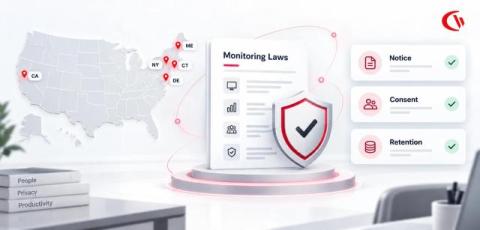
The location from which employees log in remained the same with the introduction of hybrid working; instead, it was the level of visibility that employers believed was necessary and the amount of scrutiny that this visibility drew that changed. In six states, laws require notice and consent for workplace monitoring; in Connecticut, rules became stricter on October 1, and Maine’s new law took effect this July.

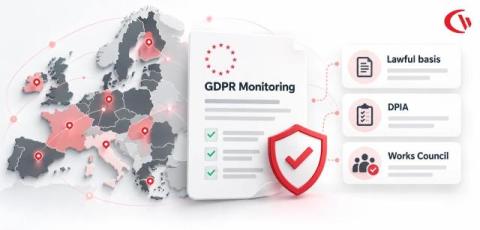
GDPR Compliance in Employee Monitoring Software DPIA & Lawful Bases Guide (2026 Review)

When using employee computer monitoring software across the European Union (EU), companies have to find a balance between two legitimate, yet conflicting, aims: the safeguarding of corporate networks, know-how and confidential data on the one hand, and the preservation of employees’ privacy and fundamental rights on the other.

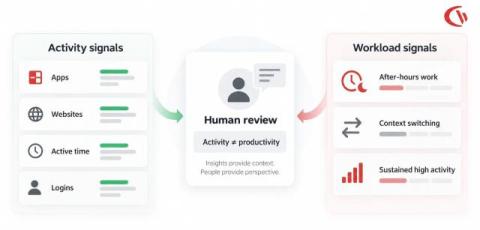
Remote Employee Productivity Benchmarking 2026: Activity Signals vs. Burnout Risk

As distributed and hybrid work become the default operating model in 2026, a new productivity dilemma is emerging for organizations: How can organizations measure remote employee productivity without setting up a system that causes exactly the opposite- a loss of focus, engagement and sustainable performance? Productivity monitoring tools have long relied on visible activity.

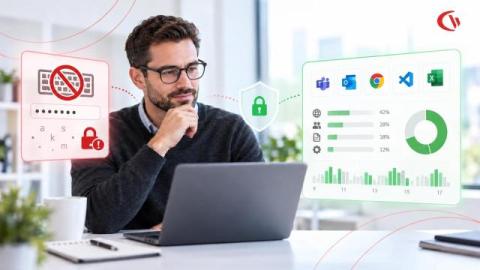
Keystroke Logging vs. Application Tracking: Choosing Non-Invasive Employee Analytics

As hybrid and distributed work matures into 2026, enterprises’ visibility challenges become more nuanced than whether an employee is logged on or off. IT leaders need visibility into how corporate applications, websites, devices, networks, etc., are accessed, but they also need to know how much information to collect.

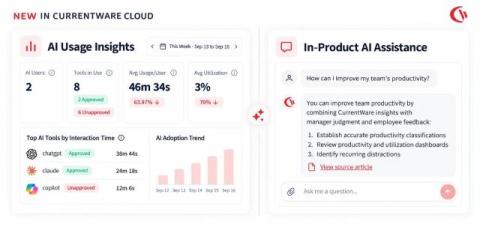
CurrentWare just got smarter about AI, inside your workplace and inside the product

AI is changing both how employees work and how IT teams manage the tools they rely on. We are building for both. This week, we added two new AI capabilities to CurrentWare Cloud. AI Usage Insights is the workplace side that shows you which AI tools your employees are actually using, how adoption is trending across teams, and where unapproved tools are showing up.

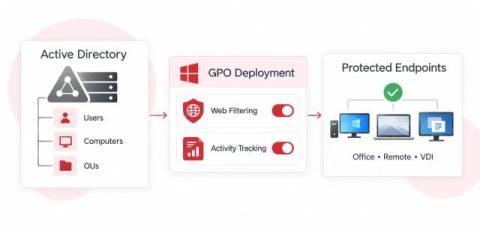
Active Directory Web Filtering & User Activity Tracking: Complete GPO Setup Guide

Active Directory Web Filtering & User Activity Tracking: Complete GPO Setup Guide Strong endpoint security, compliance, and greater employee productivity in hybrid environments require close integration with the organisation’s core identity infrastructure. In enterprise Windows networks, Active Directory Domain Services (AD DS) form the essential basis of the firm’s identity.

IT Monitoring and Employee Analytics Without Dedicated IT Staff: A 30-Day SMB Implementation Plan

Without a full IT department, visibility in a remote work scenario can feel less like a necessity and more like a luxury for a small or medium-sized business. For employees scattered across homes, co-working environments, branch offices, and various time zones, small and medium-sized business owners have some basic, burning questions they want answered: “Which applications are being utilized? Where is business time actually spent?

How to Monitor Remote Workers Without Micromanagement: A Non-Invasive Framework for IT

One remote worker might spend 3 productive hours working non-stop without ever touching their keyboard, while another might trigger hundreds of thousands of mouse movements with no meaningful output; that is the problem with monitoring remote work through surveillance: activity and productivity are not always synonymous.