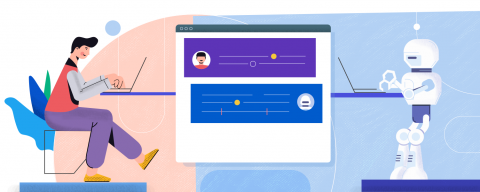


Previously, on the “Chatbot Best Practices for designing a Conversational Experience with Workativ Assistant” blog, we would’ve delved into the things to do before designing a dialog flow for a chatbot and how to set up the actual dialog using Workativ Assistant’s Dialog Designer and test it. In this blog, we’ll be looking into what all we should do before setting up an automated workflow using Workativ Assistant’s intuitive 3-Step Automation Designer.
Workativ Assistant: Hey ! I’m , a chatbot that not only answers your queries but also takes care of your needs in a jiffy.
Chances are, you have found yourself on this blog because you’re a Business Owner, a CIO, or an IT Manager, who’s looking toward digital transformation to stay relevant with changing times. Can’t blame you though. According to this survey, market pressures are the leading drivers of digital transformation as most efforts are spurred by growth opportunities (51%) and increased competitive pressure (41%).
The rise of the AI bots may sound like a sci-fi horror scenario, but in reality, the growing industry of bots isn’t scary at all—it’s a technology that brings real, tangible benefits to businesses and customers alike. Bots are already a big part of the customer service landscape. In 2018, the bot market was worth $1.274 billion and predictions anticipate it reaching $7.5 billion by 2024.
If you’re a business that wants to up your customer experience strategy through AI, chatbots are definitely the answer you’re searching for. As customers’ expectations continue to evolve and the need for speed grows, chatbots pave way for quick-fix answers to customer queries. The more questions you receive from customers, the more cost-effective of a solution chatbots can be for your company.
In the year 2020, nearly 80% of businesses will use a chatbot in one form or another. Chatbots have become an important part of business growth and the need for these AI-powered bots is only going to increase in the future.
Implementing live chat in business websites increased average order value by 14%1 and website pages views per session to 263%. 51%2 customers prefer chatbots in customer support over emails, given they are easy to communicate to. Both these statistics project a very welcoming stance for the respective channels. But which one is preferred over the other? Will live chat benefit your business the most, or will a chatbot do the trick for you?
Humans have always loved the idea of robots having feelings. Hollywood has cashed in on this affinity in multiple films, from making robots fall in love with each other, to an alternative dystopian future where robots are taught to feel, leading them to overpower humans. But even with such narratives, humans like it better when chatbots are taught more about feelings and made to assist them with empathy1.
The digitally conscious customer of today needs immediate responses. A key factor in staying ahead of the competition is the ability to provide proactive customer support to your customers. Live chat support came to the rescue and enabled agents to respond to customers as swiftly as they could. But this was not good enough. It is almost impossible for live agents to be available all the time for the omnipresent customer.