

Teams | Collaboration | Customer Service | Project Management

What is Stealth Monitoring? Definition, Benefits & Industry Uses

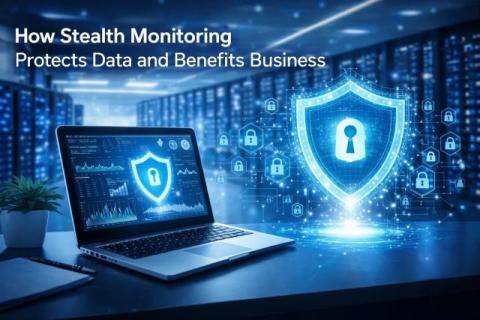
57% of database breaches happen due to internal factors. That’s why stealth monitoring exists. Stealth monitoring is a way to track what someone does on a device without them knowing. The monitoring tool runs quietly in the background. Then, it provides the admin with all the user data for analysis.

Stealth Monitoring for Security: Stopping Threats in 2026

When 68% of breaches occur due to “human element”, traditional security is not enough. This is where stealth monitoring comes in. In the security world, it’s not about spying. It’s about User Activity Monitoring (UAM) or Endpoint Telemetry. And secret monitoring proves to be the most effective for such datapoints. In this blog, we’ll cover the issues stealth aims to solve for security and the data you should capture with it.

Pros and Cons of Monitoring Employees in Stealth Mode

Key Takeaways: Stealth monitoring means software runs quietly on computers. True "covert" monitoring happens when workers don't know about it. When done right, it can spot problems like strange file transfers, malware clicks, or broken rules. This helps managers see what happened and when. Good monitoring programs follow a simple plan: Tell employees about it in your policy. Only track work activity. Give access based on job roles and delete data quickly.

Employee Productivity Report: A Secret To Your Business Success

Are you a small business owner or a growing team that wants to improve employee performance? Then it’s time you introduce your business system with employee productivity reports. For managing individuals' performance to mapping your business goals, measuring employee productivity are the fundamentals of how your business works. And to ensure your business success, why should you create one?

Busy vs Productive: Instrumenting Focus, Flow, and Recovery So Teams Ship More in Fewer Hours

The scene of our office was like i) everyone drowns in their own work all day ii) they rarely communicate with others except for work purposes iii) they are all in competition to do more work!! Firstly, this was not a big deal for us. But over time, we started noticing how everyone was burning out silently. And to save the team, it was necessary to reshape how the team thinks to work! So, what was our strategy to overcome this? Let’s dive into the journey of turning business into productivity.

The Monitoring Policy that Employees Wrote Themselves (and why it works better)

The people who are being monitored know their work better than anyone else. They know what metrics actually reflect their effort, and what numbers are just noise. In our company, it was our goal to help the employees understand the policies. But no matter how thoughtfully we tried to frame it, any rule coming from management felt like surveillance to them. So, we flipped the script.