
Teams | Collaboration | Customer Service | Project Management

How to Implement ECM Effectively

Selecting an Enterprise Content Management (ECM) system is an important step, but the true value comes from a successful implementation process. An effective ECM implementation ensures that the technology supports business processes, improves document management, and strengthens records management. With the right planning and focus on user adoption, an ECM solution becomes a lasting asset for the organization.

Workspaces: Context-First Document Management

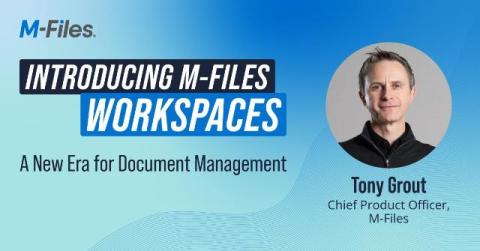
Today we're diving into M-Files Workspaces, a breakthrough in how businesses manage documents, projects, and processes. Joining us is Tony Grout, Chief Product Officer at M-Files, who shares what makes Workspaces a game-changer for knowledge workers and why it represents the next evolution of document management.

ECM for Compliance, Security, and Governance

Managing information is no longer only about efficiency. Regulations, audits, and privacy laws require organizations to prove they control their content. Enterprise Content Management (ECM) supports compliance and governance by applying consistent rules for how documents are stored, accessed, and retained. It gives businesses both the security to protect sensitive data and the structure to meet regulatory demands.

Enterprise Content Management: Benefits and ROI

Organizations generate a constant flow of information: contracts, invoices, HR records, emails, designs, and more. Without structure, this content gets scattered across inboxes, desktops, and shared drives. Enterprise Content Management (ECM) brings order by managing content from creation through retention. The result is measurable business value.

What Is Enterprise Content Management (ECM)?

Enterprise Content Management (ECM) helps organizations capture, organize, store, and secure business content. It takes documents, emails, images, and records out of scattered folders, inboxes, and paper files, and brings them into a single controlled system. With ECM, information is searchable, secure, and accessible to the right people at the right time. The result is better efficiency, lower risk, and more consistent operations.

M-Files Enters the Microsoft 365 Universe - A New Era of AI-Native Document Management

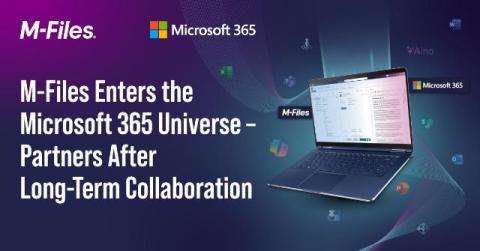
This collaboration marks a major milestone: M-Files is the first document management solution to be native with Microsoft 365. That means you get all the built-in capabilities of Microsoft 365 with M-Files – including co-authoring, collaboration, Copilot, and Purview. With deep integration into Microsoft 365 Copilot, M-Files content can now be used to generate insights, automate document-related tasks, and streamline decision-making across the organization. AI-Driven Efficiency and Insight.

DMS ROI and Best Practices

A Document Management System can deliver measurable business value—but only if it is implemented and used effectively. From improving operational efficiency to reducing errors and increasing compliance, a DMS creates cost savings that extend far beyond initial setup. This article explains how to evaluate DMS return on investment and outlines best practices to maximize long-term benefits.

Exploring DMS Features: Metadata, Version Control, and Beyond

Modern Document Management Systems do more than store files. They organize, secure, track, and enhance every step of the document lifecycle. From smart metadata and versioning to real-time tracking and duplicate prevention, a good DMS helps teams work more efficiently and with fewer errors. This article breaks down key DMS features that go beyond basic storage and shows how they support productivity, collaboration, and compliance.