
Teams | Collaboration | Customer Service | Project Management

What Is An Audit Trail And Why BPO Clients Demand One

Quick answer An audit trail is a time-stamped record of who accessed which systems and data, what they did, and when and where they did it. BPO clients demand one because it is the only reliable way to prove their data was handled to contract, and because GDPR, HIPAA and PCI DSS all expect user activity to be logged and reviewable.
HIPAA And Remote Work, Protecting PHI At The Home Desk

A patient calls a healthcare support line at four in the afternoon. The agent who answers is working from a second bedroom, confirms the caller identity, opens the record and reads back a recent procedure and a prescription. The call is encrypted, the login was clean and the recording is retained exactly as the policy says. None of that addresses the person who walked into the room thirty seconds earlier and can see the screen.

Data Processing Agreements And What BPOs Must Sign And Enforce With Clients

A data processing agreement is the contract that sets out how a BPO may handle a client’s personal data, including instructions, security measures, sub-processors, breach support and audit rights. Signing it is only half the job. BPOs must also enforce every clause on every seat and be able to prove it.

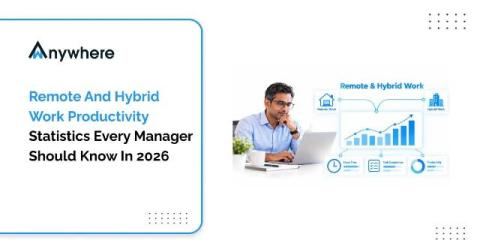
Remote And Hybrid Work Productivity Statistics Every Manager Should Know In 2026

Hybrid is now the most common arrangement for remote-capable employees, at 52% according to Gallup’s May 2026 data. Rigorous research, including a randomized trial published in Nature and industry analysis from the US Bureau of Labor Statistics, finds that remote and hybrid work does not reduce productivity on its own. The bigger risks for managers are trust gaps, uneven measurement and data security on remote seats.

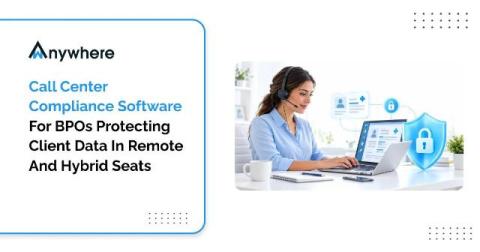
Call Center Compliance Software For BPOs Protecting Client Data In Remote And Hybrid Seats

A collections agent signs in from a bedroom in a shared flat at seven in the morning. The VPN connects, the client CRM opens and a screen full of cardholder records appears. For the next eight hours every system log will read as compliant. Not one of them will record that a flatmate walked behind the monitor twice, or that a phone sat propped against a water bottle with the camera pointed at the screen. That is the gap outsourced delivery now lives with.

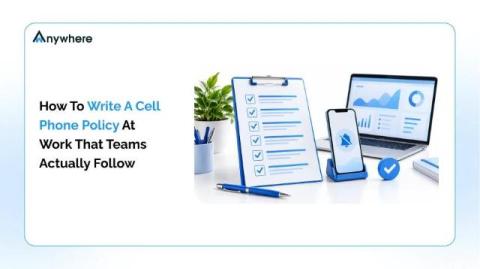
How To Write A Cell Phone Policy At Work That Teams Actually Follow

Most handbooks already have a phone rule in them. Walk any floor at two in the afternoon and you will see how much it is worth. Phones are face down beside keyboards, in laps, propped behind monitors, checked during the gap between one call ending and the next connecting. The rule is not being defied. It is being ignored, which is a different and more awkward problem.

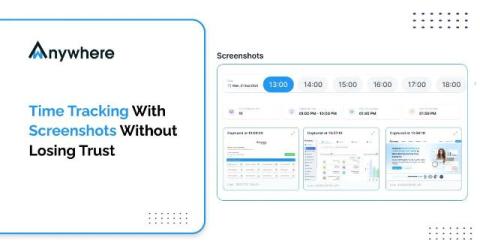
Time Tracking with Screenshots Without Losing Trust

Time tracking with screenshots pairs logged hours with periodic visual snapshots of a screen, and it earns adoption or resentment based entirely on implementation, not the technology itself. Companies use it to verify work, support client billing, close remote visibility gaps, and investigate exceptions, but a screenshot only shows what was visible at one moment, never actual productivity.