
Teams | Collaboration | Customer Service | Project Management

Guide to waterfall methodology: Free template and examples

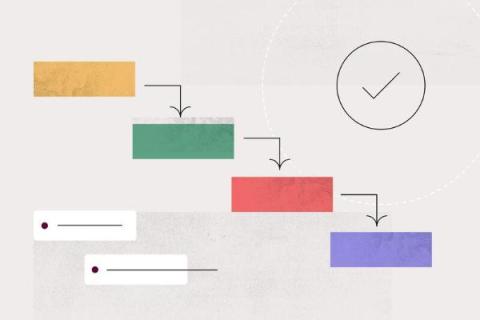
Waterfall project management is a sequential project management methodology that's divided into distinct phases. Each phase begins only after the previous phase is completed. This article explains the stages of the waterfall methodology and how it can help your team achieve their goals. Project managers have many different types of project management methodologies to choose from. There's Agile project management, Kanban project management, Scrum, and many more iterative processes that you can use.


Project deliverables: What are they in project management?

Every project has an objective. Whether you’re making some updates to your website or building the next Eiffel Tower, you and your team are working towards something. Ultimately, running a successful project means having something to show for it at the end of the project’s timeline, whether that’s a tangible thing—like a new product or an ebook—or an intangible thing—like a decrease in customer churn or increase in NPS score.

How to conduct a stakeholder analysis (+ free template)

Think of your project as an Oscar-nominated movie. You won, and you have to go up and give your big speech. Who do you thank? In project management, those people would be your project stakeholders—people who have a stake in your project and have helped you get there in some way. Project stakeholders can vary from the people doing the work to the people approving the work to the people you’re doing the work for, but they’re all important.

How Asana's AI Studio helps our culinary team work smarter

What do chefs and AI have in common? At Asana, they’re working together to solve a real workplace challenge. Our in-house culinary team was fielding growing requests for nutrition info—and manually calculating every meal wasn’t scalable. With Asana AI Studio, we built a workflow that generates accurate nutrition data automatically, so the team can keep cooking and employees can make informed choices.

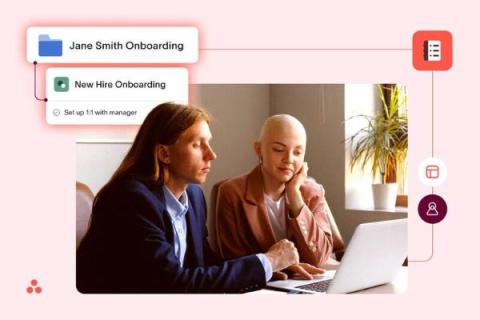
Fix these common onboarding challenges to boost productivity

The data doesn’t lie—a good onboarding process leads to happier, more productive employees. But while onboarding can increase retention rates by 82%, only 12% of employees strongly agree that their organization does a great job of onboarding new hires. Creating a smooth onboarding process is challenging, so it’s not surprising that some organizations fall short. But it doesn’t have to be that way.

Understanding dependencies in project management

A project dependency is a task that relies on the completion of a different task. This article breaks down key terms associated with dependencies and the different kinds of dependencies you may see in project management. Much like a relay race, projects are often completed by passing tasks from one team member to the next. Unlike a relay race, some project tasks require other tasks to move forward before they can be started. This relationship between tasks is known as a dependency.

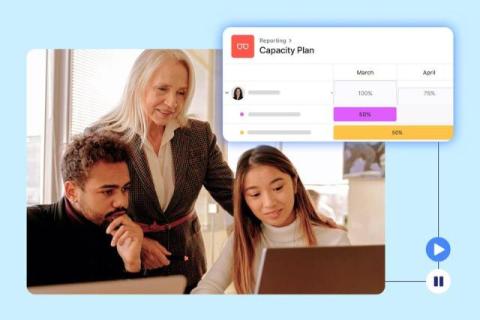
How Asana uses work management to optimize resource planning

Initiatives can’t succeed without the right resources. Nobody knows this better than Rita Khayat, Asana’s Head of PMO for Strategy and Operations. Khayat is responsible for keeping business-critical goals on track—which she does by allocating the right resources, at the right time, to the most important work. Khayat’s team is responsible for four main business areas within the CIO org: Resource management is essential for each of these areas.

How Asana uses work management for organizational planning

Rita Khayat is an expert at managing complex, company-wide programs. As Asana’s Head of PMO for Strategy and Operations, Khayat is responsible for keeping business-critical goals on track. She does this with clear processes, 20+ years of experience, and a knack for using Asana to its full potential. Khayat’s team is responsible for four main business areas within the CIO org: Together, these responsibilities span many different teams and require a high level of cross-functional coordination.

How Asana AI Studio helps content teams move faster

Content and creative teams know the struggle—coordinating across channels while maintaining a consistent message is hard. That’s why our content marketing team built an AI-powered editorial assistant using Asana AI Studio. It turns research reports into ready-to-use content outlines for every channel, instantly aligned to your brand voice. The result? Faster launches, less busywork, and more time to focus on creative innovation.

What's new in Asana | April 2025

Welcome to the April edition of What's New in Asana, Asana's monthly product update. First, edit a rule’s title, controls, and permissions from the rules settings sidebar. Next, add collaborators to help draft status updates before they are published. Finally, define, manage, and share company-specific terminology, acronyms, and technical jargon directly within Asana.

How to create a cross-functional team in 4 simple steps

A cross-functional team is a permanent or temporary group of people with different types of experience working together to achieve a common goal. Cross-functional teams benefit companies because when team members with multiple skill sets work together, they can pursue company goals more efficiently. In this piece, we’ll explain what a cross-functional team is and provide tips for how to build one.

How Asana's AI Studio helps security teams beat alert fatigue

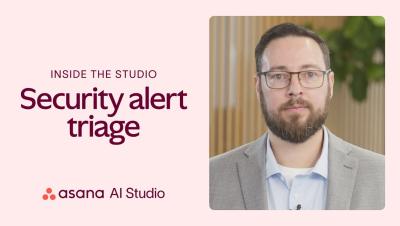
Struggling with alert fatigue? See how security and IT teams are using Asana’s AI Studio to cut through the noise and focus on what matters most. In this video, learn how Asana’s AI-powered workflows help teams triage faster, reduce manual work, and stay ahead of critical issues.

Program manager vs. project manager: Key differences

You may know what project management is, but have you ever heard the term program management? While the two sound similar, you might be surprised to learn there’s a lot that sets them apart. Whether you’re searching for the right role for your team or want to improve your work management processes and methodologies, we’ll help you understand the differences between a program manager vs. project manager.

Provider onboarding software: Streamline your hiring process

Provider onboarding software automates the process of adding new healthcare providers to a network, replacing manual tasks with digital workflows. This technology helps reduce administrative burdens, speeds up credential verification, and ensures regulatory compliance. Consider a large healthcare network struggling to manage its provider onboarding process. The HR team spends excessive time on manual paperwork, credential verification, and coordinating system access across departments.

Asana tips: 9 remote work best practices from our customers

Right now, teams around the world are learning how to effectively work remotely. The transition can be a challenge, especially if you’ve never worked in a remote team. And, no matter how much experience you have with remote work, we’re learning—together—that it takes time to find your groove and settle into a routine in this new “normal.” But you aren’t alone.

How to streamline compliance management software with work management tools

Compliance management software streamlines the process of complying with industry regulations and internal policies by automating tasks like documentation, monitoring, and reporting. Compliance software helps companies avoid costly fines, reduce risks, and maintain a strong reputation by ensuring they consistently meet regulatory requirements with minimal manual effort. Drowning in regulatory paperwork? You're not alone.

8 tips from best-in-class IT leaders on AI and role changes

At The Work Innovation Summit, top IT leaders from Slack, Zscaler, and Asana shared strategies for adopting AI with intention. Their key advice: experiment carefully, prioritize data governance, and focus on long-term value. This roundup offers insights into building a thoughtful AI roadmap and driving innovation through IT leadership.

30-60-90 day plan for new hires (template and examples)

A 30-60-90 day plan outlines the first 90 days of a new team member’s employment and familiarizes them with company policies, teamwork, and goals. This action plan helps your team members check off essential items as they adjust to their new work environment. In this piece, we’ll outline the key components of a 30-60-90 day plan and explain why having one is beneficial.

4 Ps of marketing: How to build the right marketing mix

The 4 Ps of marketing are price, promotion, place, and product—the four key factors every marketing manager should use to guide their campaign strategy. Our guide covers the 4 Ps of marketing and gives a breakdown of each step involved. Product, price, place, and promotion. According to the marketing mix theory, these 4 Ps are the building blocks of any successful marketing campaign.

Don't let your digital tools sabotage the employee experience

This article was originally published on Reworked. Great companies don’t just value the employee experience (EX) — they’re fanatical about it. In the past, this obsession translated into office spaces that resembled adult playgrounds, boasting features like climbing walls and bean bags, baristas serving up artisanal lattes and serene meditation spaces for decompression.

Don't let your digital tools sabotage the employee experience

This article was originally published on Reworked. Great companies don’t just value the employee experience (EX) — they’re fanatical about it. In the past, this obsession translated into office spaces that resembled adult playgrounds, boasting features like climbing walls and bean bags, baristas serving up artisanal lattes and serene meditation spaces for decompression.

How to prioritize tasks in 4 steps (and get work done)

Tired of your never-ending task list and watching your priorities get pushed to the side? Learn how to create a task list, choose a prioritization strategy, schedule your tasks, and communicate with your team to increase productivity and get things done. If you’re like most people, you usually start your workday with the intention of being as productive as possible. Yet, as the day rolls on, you find yourself fielding multiple urgent requests and watching your task list grow.

Solve your tech overload with an intelligent transformation

This article was originally published on Inc. Over the past decade, the corporate world has obsessively chased digital transformations. But now, surrounded by a clutter of apps and incessant digital notifications, it's become painfully clear: we've been duped. Our workplaces have become dense jungles of digital clutter, leaving workers frazzled and exhausted. It's time to cut through the chaos.