

Teams | Collaboration | Customer Service | Project Management

What is a Customer Pipeline and What Can It Do For You?

If your B2B business is aiming to grow in 2025 and beyond, then chances are that your sales team is chasing new business. It’s a reasonable strategy – new business acquisitions means more revenue. But what if this new business is replacing churned customers and there is no net growth? Even worse, what if this strategy is plugging a hole of capsized revenue left by more churned customers than acquired ones?

How to Train and Onboard Support Agents Quickly Without Sacrificing Quality

For customer support managers, few challenges are more urgent—or more daunting—than ramping up new agents quickly and effectively. Whether you’re scaling up or replacing outgoing staff, the longer it takes to get new hires up to speed, the more pressure it places on your experienced team—and the more risk you run of customer dissatisfaction. The problem? Many B2B support teams are grappling with long ramp times, complicated tech stacks, and rising expectations from customers.

Understanding Customer Support SLAs: Maximizing Satisfaction

We’ve all been there. Unlocking our phone, opening the Uber or Lyft app, and ordering a ride. When we do so, both the driver and rider are agreeing to certain terms and conditions: picking the rider up within a designated time frame, how much the trip should cost, an estimated arrival time, and delivering the rider to their destination safely. This agreement of sorts is similar to Service Level Agreements (SLAs), which ensures service obligations and promises are kept.

Reducing Ticket Volume Without Compromising Customer Experience

Customer support leaders face a growing challenge: overwhelmed teams drowning in a flood of repeat or low-value tickets. As customer expectations for fast, effective service continue to rise, support organizations are under increasing pressure to deliver exceptional experiences—without burning out their staff or inflating costs. The solution many companies are embracing? Empowering customers to help themselves through strategic self-service options.

Improving First Response and Resolution Times in Customer Support: Strategies That Actually Work

Modern support leaders know this well: Customers expect fast, accurate responses no matter where they reach out—whether it’s via email, live chat, social media, or phone. The longer they wait, the more frustrated they become—and the more likely they are to churn. If you’re a support leader trying to meet these rising expectations, you’re not alone.

Gaining Visibility Into Performance: The Key to Proactive, Data-Driven Support

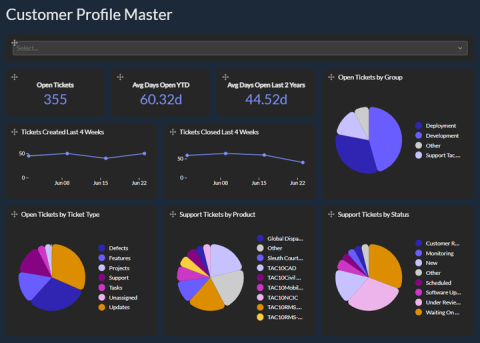
B2B SaaS support teams often face an invisible roadblock: a lack of actionable data. Without visibility into performance, it’s nearly impossible to identify bottlenecks, improve processes, or proactively support your customers. And yet, many teams are still flying blind—relying on gut instinct rather than insight.

Omnichannel Support for Seamless B2B Customer Interactions

In today’s fast-paced, customer-driven world, businesses need to provide support across multiple channels to meet customer expectations. From emails and phone calls to live chats, social media, and more, customers expect a seamless experience no matter how they choose to reach out. This is where omnichannel customer support solutions come into play, enabling businesses to provide consistent, high-quality support across all touchpoints.

What Does AI Support Look Like from the Customer's Point of View?

When businesses consider implementing AI in customer support, the conversation often centers around cost savings, faster resolution times, and improved scalability. These are important benefits, but they only tell half the story. The other half—the more human half—is how these tools actually impact the customer experience. As support professionals, we know that choosing a support solution isn’t just a question of operational efficiency.

Top 5 Benefits of Using AI Chatbots for Customer Service

AI chatbots have revolutionized the way businesses interact with their customers. By handling routine inquiries and providing immediate responses, chatbots free up human agents to tackle more complex issues. This not only improves efficiency but also enhances customer satisfaction. TeamSupport saw this right away when we implemented AI chatbots on our own website. After just a few short weeks of implementation, we saw: Thinking about activating AI chatbots on your business website?

How TeamSupport Brought AI into Customer Support-Without Losing the Human Touch

Over the past six months, TeamSupport has been on a mission: bring the power of AI into customer support while keeping the experience personal. The goal? Scale our support operations to meet growing demand—especially from enterprise clients—without compromising on quality. And after a half-year of real-world testing, iteration, and plenty of learning moments, the results are in.