
Teams | Collaboration | Customer Service | Project Management

20 project manager interview questions and answers

Landing a project management interview is a big accomplishment. But you’ll only get a chance at the job if you prepare for the interview properly. In this article, we cover some of the most common project manager interview questions and answers so you can ace this interview and get hired. Congratulations! You got the interview for a project manager position. But right after you put the date on your calendar, the interview jitters hit.

How AI Studio streamlines buying at Asana

In the complex world of corporate procurement, success hinges on more than just buying and selling. It's about strategic navigation—balancing vendor relationships, financial management, and organizational risk. At Asana, this complexity reaches new heights. "Our most intricate agreements can involve up to seven cross-functional teams, with countless hand-offs," explains Jennifer Liu, Asana's Procurement Operations Lead. This complexity has made procurement a prime candidate for AI innovation.

12 tips for effective communication in the workplace

Effective communication transcends simple information exchanges. Understanding the emotions and motives behind the given information is essential. In addition to successfully conveying messages, it's important to actively listen and fully understand the conversation, making the speaker feel heard and understood. Today, we’re in almost constant contact with our coworkers.

How Asana uses work management to drive product development

Modern-day product development isn't just about the latest feature or trending use case. At Asana, we're redefining product development by innovating how we listen and respond to our customers. Partnered with our work management platform, we can more effortlessly turn this feedback into action.

How Asana uses work management to effectively manage goals

Goals give structure to big-picture plans for your business—but they’re only useful if you can action on them. Lotte Vester, Head of Organizational Strategy at Asana, drives a process to guide teams through execution of goals. She helps transform broad initiatives into focused goals and Key Results (KRs) for Asana's dynamic teams. But she’s a one person team, and Asana is a multi-faceted, global organization. So she doesn’t try to do it alone.

15 types of employee performance reviews (with templates and examples)

An employee performance review is a meeting between a manager and their employee to discuss how the team member is pacing toward organizational goals. Though simple in design, there are many ways to create a more effective process that brings your reviews to life. See the top 15 performance review templates to measure success and improve your review skills. Measuring success is a key piece to leading an effective team. After all, you can’t improve until you know what skills you need to build.

Beat thrash for good: 4 organizational planning challenges and their solutions

Mobilizing an entire organization is hard. Processes often involve many stakeholders and workflows, while teams work in isolation with their own tools and collaboration methods. As a result, trying to execute your business plan can feel like turning a massive tanker ship—slow, clunky, and inefficient. But it doesn’t have to be that way. We’ve taken a deep dive into four common organizational planning challenges so you can arm yourself with the right solutions for each one.

Project closure: 8 steps to finish projects confidently

Project closure is the last stage of a project, when you tie up loose ends, communicate your results, and debrief with your team. Just because you’ve hit your objectives doesn’t mean work is finished, and a clear project closure process ensures that you check every important task off your to-do list before officially wrapping things up. In this article, learn eight steps to help you close projects with confidence.

How to do PEST analysis (PESTLE analysis): A simple guide

Both PESTLE analysis and PEST analysis are research tools that help you analyze the surrounding political, economic, socio-cultural, and technological environment that can affect your business. Learn how these tools can help prevent risk and inform your team’s future business decisions. Change can be scary. Oftentimes, the best way to deal with change is to understand it.

What is a PERT chart? Easy steps to create and use one

If you’ve ever struggled with mapping project tasks or keeping track of dependencies, we have the perfect solution for you. A PERT chart, also known as a PERT diagram, is a tool used to schedule, organize, and map out tasks within a project. PERT stands for program evaluation and review technique. It provides a visual representation of a project's timeline and breaks down individual tasks. These charts are similar to Gantt charts, but structured differently.

How to create crystal clear action items

Action items are follow up tasks that you create from a meeting. They should be clearly defined with a description and a deadline, and help bring the conversations you have in meetings to life. Here, we’ll show you the benefits of creating action items, how to create them, and potential mistakes to avoid. It's the end of a successful project kickoff meeting and your team members are ready to move forward to execute everything that was decided in the meeting.

Understanding the Pareto principle (The 80/20 rule)

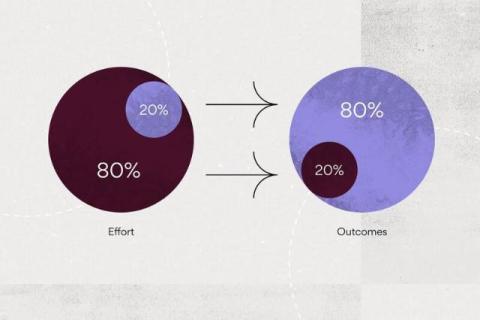
The Pareto principle (also known as the 80/20 rule) is a phenomenon that states that roughly 80% of outcomes come from 20% of causes. In this article, we break down how you can use this principle to help prioritize tasks and business efforts. When you get into the office in the morning, what's the first thing you do? Most people grab their caffeinated beverage of choice, check their email, and prioritize their tasks for the day. But what techniques do you use to identify what needs to get done first?

What is a workcation? (And when should you take one?)

Workcations are a work and travel trend that combine working and taking a vacation. They’re on the rise, thanks in a large part to the increased location flexibility and rising worker burnout. Taking a workcation might be just what you need to destress, recharge, and get motivated—as long as you plan it the right way.

Tips for creating a request for information (RFI) document and template

A request for information (RFI) is a document a company sends to vendors to gather information on vendors’ available services, qualifications, and products. RFI documents can include everything from general goals and objectives to evaluation criteria and submission details. An RFI template makes it easy for your team to find the best vendors to help you complete new projects. Learn how to create an effective RFI process and when to use one.

6 project constraints and how to manage them for project success

Project constraints are the general limitations of a project, including time, costs, and risks. Understanding project constraints is important because they affect project performance. In this piece, we’ll discuss project constraints in detail and explain how to manage them. Have you ever been to the circus and watched the performers do a balancing act? They somehow manage to hold multiple plates up in the air so gracefully that it feels like they must be using magic.

Four-Day Workweek: The Good, The Bad & The Reality

Studies have shown that the four-day workweek, which allows employees to work fewer days without a change in benefits or pay, can increase employee productivity and overall happiness. But it’s not the right fit for every company or team. Here’s how to know if it will work for you. The four-day workweek is no longer just a radical idea—it’s becoming a serious consideration for businesses looking to rethink work schedules, productivity, and employee mental health.

Collaboration and coordination are different-here's when to use them

More collaboration isn’t always better. In fact, research from The Work Innovation Lab, a think tank by Asana, shows that too much collaboration can actually hold workers back. In a survey of over 1,500 workers, 29% of leaders said that the expectations put on employees to collaborate prevented them from completing their work. But while too much collaboration is bad, teams still need to work together to achieve business goals.

Tech leaders' new edge: Strategic and deeply human

Today’s IT leaders are no longer just operators. They’re strategists
and deal-makers. According to a recent report on the state of today’s IT leader published by The Work Innovation Lab, a think tank by Asana, there’s been a dynamic shift in today’s IT environment away from traditional IT roles toward strategic partnership roles.

Build a marketing operations strategy in 4 steps

Marketing operations describes the function of overseeing an organization's marketing program, planning, and strategic activities. By bringing team members with unique skill sets together, you can build a strategy that meets your most important goals. Learn four steps to create an effective marketing operations strategy, plus why it matters. Operations management is a crucial part of any organization because it keeps everyday processes running smoothly.

7 common causes of scope creep, and how to avoid them

Scope creep happens when stakeholders add more deliverables or push back deadlines. This can delay the project timeline, and bring team morale down. But scope creep is preventable. In this article, learn how scope creep happens and what you can do to stop it. Picture this: you’re hard at work on a project and its deliverables. Suddenly, you get an ask to add another deliverable. It wasn’t in the original plan, but it’s easy enough to do, so you agree.

Goals vs. objectives: A project manager's breakdown

A goal is an achievable outcome that is generally broad and long-term while an objective defines measurable actions to achieve the overall goal. Find out the real differences between the two to inform your team’s strategy. When it comes to leading a team, setting goals and objectives helps you achieve your desired results. From large business goals to small daily objectives, these methods help set your team apart from the competition.

Why you should prioritize employee empowerment

Employee empowerment is more than a buzzword—it’s the key to creating a happy and productive team. Learn why empowerment is essential, plus try five concrete strategies to give your team the support, agency, and confidence they need to thrive at work. Think of the last time you accomplished something on your own. Maybe you learned how to fix your computer, do your taxes, or play an instrument.