
Teams | Collaboration | Customer Service | Project Management

Workforce Analytics: What It Is, Why It Matters, & How to Get Started

Workforce analytics might sound technical, but it’s actually pretty simple. It is the practice of collecting and analyzing employee data to boost performance, reduce turnover, and optimize your operations. In this guide, you’ll learn what workforce analytics means, why it matters, and how you can use it to improve your workplace. We’ll walk through the biggest benefits, share some real-world examples, and give you tips on how to get started right away.
Ultimate Guide to Timesheet Reminders: How to Automate & Optimize

For every hour that goes unrecorded, misreported, or forgotten altogether, companies bleed revenue, disrupt payroll, and risk non-compliance. And yet, timesheet submission often becomes an afterthought in busy teams, especially in remote or hybrid work environments where visibility is already a challenge. That’s where timesheet reminders come in.

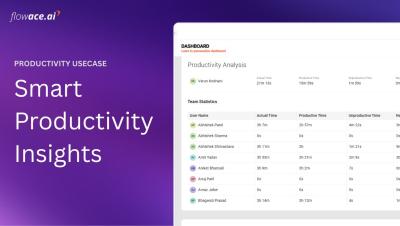
Revolutionize Workplace Productivity with Flowace | Quick Product Tour

Are you struggling with team productivity, time leaks, or accountability? Meet Flowace – your intelligent productivity assistant that helps organizations boost efficiency through automated time tracking, employee insights, and activity analytics. In this short demo, we’ll walk you through how Flowace helps: Track work hours effortlessly Gain actionable productivity insights Improve time utilization across teams Enable silent tracking for transparency without micro-managing Integrate seamlessly with tools like Jira, Slack, HRMS, and more.

What Is a 2-2-3-Schedule and How Does It Work?

In industries that run 24/7, like hospitals, factories, and emergency services, keeping operations going around the clock is non-negotiable. But balancing employee health, shift fairness, and operational efficiency? That’s the real challenge. Enter the 2-2-3-schedule, also known as the Panama schedule, a rotating shift strategy that cleverly spreads out work and rest over a two-week cycle. It’s not your typical 9-to-5.

How to Create a Pitman Schedule for 24/7 Staff Coverage

If you need your team to be working 24/7 without getting burned out, the Pitman schedule might be your answer. You’ll often see it used in places like hospitals, police departments, emergency services, factories, utility companies, and any industry that can’t afford a shutdown. What makes the Pitman schedule so popular? It gives your team long breaks, a predictable routine, and fair rotation between day and night shifts.

Virtual Teams: Key Advantages and Disadvantages You Need to Know

While virtual teams are on the rise, it’s important to weigh the advantages and disadvantages of virtual teams before going all-in. An estimated 36.2 million individuals will be working remotely in 2025, with 72% of multinational corporations providing remote work opportunities. This shift has been fueled by technological advances and the global push toward flexible work after the pandemic.

Outsourcing to India: Is It Worth the Investment in 2025?

Outsourcing has always been a smart way to cut costs and find great talent. And when you think of outsourcing, India is usually the first name that comes to mind. For years, it’s been the go-to place for IT, BPO, and customer support services. But now things are changing. New players like the Philippines, Vietnam, and Eastern Europe are stepping up. Technology is evolving. Remote work is easier than ever. So, you might be wondering: Is outsourcing to India still worth it?

The 9 Best Time Tracking Software for Consultants: The 2025 Guide

Time is the most valuable asset in consulting, and yet, it’s the easiest to lose track of. Time tracking is hard to do in a service-based, value-based business. Whether you’re a solo freelance consultant juggling multiple clients or part of a mid-sized consulting firm delivering outcomes across teams, tracking time accurately is central to billing, productivity, and profitability.

7 Employee Monitoring Best Practices for 2025

Employee monitoring is no longer a “nice-to-have”; it’s a strategic necessity in today’s increasingly digital, distributed, and data-driven work environments. The way we work has fundamentally changed. Hybrid and remote setups are now the norm, knowledge work is spread across dozens of apps and devices, and attention is more fragmented than ever.