
Teams | Collaboration | Customer Service | Project Management

Schedule Variance Formula: What SV Measures and Where It Fails

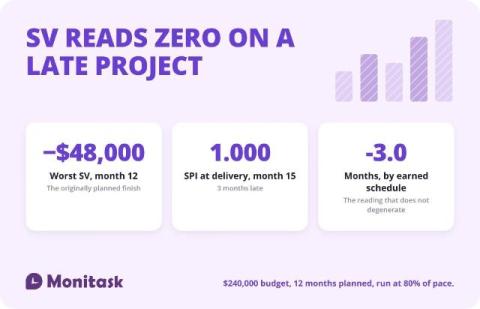
Schedule variance is SV = EV − PV: earned value minus planned value at a point in time. Negative means behind plan. The result is in currency, not days, and it has a property most explanations omit — as a project finishes, earned value converges on planned value, so SV approaches zero and the schedule performance index approaches 1.0 even when the project is late.

Timesheet Errors: What They Cost and Why Review Misses Them

A timesheet error is a difference between hours worked and hours recorded. The expensive ones are small and regular rather than large and rare: 6 minutes a day costs $27,500.00 a year across 50 people at $22.00 an hour, and amounts to 1.25% of a 40-hour week — below the threshold any practical review would flag. Under 29 CFR § 785.11, hours the employer knows or has reason to believe were worked count as hours worked whether or not they were recorded. > This is not legal advice.

Contractor Time Tracking: What to Track and What It Means

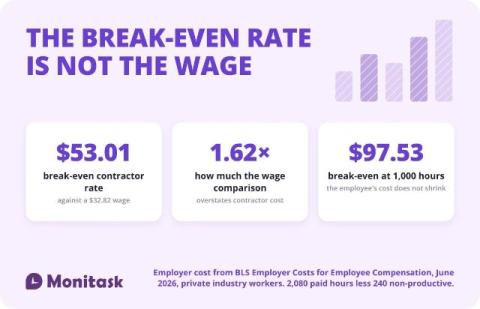
Contractor time tracking records hours against work rather than against a schedule. The distinction matters beyond bookkeeping: the IRS asks whether a business controls “or has the right to control what the worker does and how the worker does his or her job,” so a system that sets a contractor’s hours is itself a factor. And the rate at which a contractor stops being cheaper than an employee is $53.01, not the $32.82 an employee earns. > This is not legal or tax advice.

Timesheet Approval Process: Who Approves, By When, and What It Means

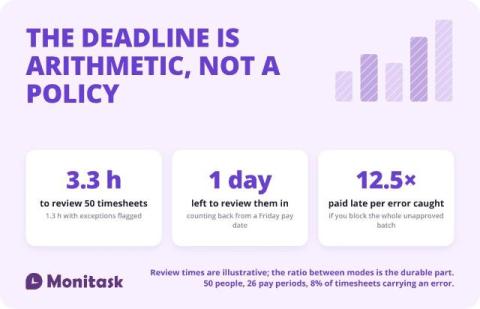
The timesheet approval process is the set of steps between an employee recording hours and those hours reaching payroll: submission, review, correction, approval and period close. The deadline is not chosen, it is counted backwards from pay date. The review is not a matter of diligence, it is a matter of how many hours the approver has.