
Teams | Collaboration | Customer Service | Project Management

Digital Transformation: Healthcare Trends Shaping the Future

How much of healthcare can we really afford to digitize? That’s the question worth sitting with before any list of trends. Healthcare is not just another industry waiting to be made more efficient – it’s deeply human-sensitive. Great quality care depends not only on knowledge, technology, and professional expertise, but on things that are much harder to measure or automate: human connection, trust, attention, judgment, and the sense that someone is actually there when it matters.

Switching from Slack to Chanty is Simple: A Detailed Guide on Data Migration

The thing nobody says out loud during a tool migration is the real fear underneath it: what if we lose everything? Years of conversations, decisions buried in threads, the context that makes a team actually understand itself – gone in one messy export. And it’s not just a technical worry. If you’re the one making this call, you’re carrying more than a checklist.

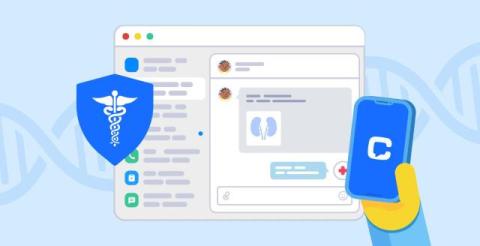
Frontline Medical Communication: How Coordination Friction Affects Patient Care and Retention

The U.S. direct-care workforce comprises about 5.4 million workers, including millions of home care and residential care workers, nursing assistants, and other staff providing care across different settings. A large part of this workforce isn’t sitting behind a desk. They are moving between rooms, units, facilities, and patients, often without a workstation of their own.

7 Effective Tools for Better Work Coordination in 2026

Nobody puts “coordination” on a job title, and yet almost everyone ends up doing it. Work coordination is the virtuous orchestration of internal and external processes – the constant, low-level hum of making sure the right task reaches the right person at the right time, that a decision made in one channel doesn’t get lost before it reaches the people who need to act on it, that a client-facing deadline and an internal review cycle actually meet in the middle instead of colliding.

Unified Collaboration Platforms: 5 Tools That Bring Work Together

Think about everything a smartphone quietly replaced. The camera you used to pack for trips. The alarm clock on your bedside table. The paper map folded somewhere in the car. A music player, a calculator, a GPS unit, and a drawer full of chargers with no obvious owner. None of those things became useless. We just stopped needing each one separately when one device could handle most of the same jobs.

Patient Engagement Software: How the Right Tools and Organized Internal Communication Shape the Quality of Care

A quiet assumption is buried in the phrase “quality care”: that care is something delivered to a patient, like a package left on a porch. In practice, care only works as a two-way transaction. A treatment plan a patient doesn’t understand, doesn’t trust, or doesn’t follow is not a lesser version of good care – it’s not care at all. Medicine has always run on consent and cooperation, not compliance in the disciplinary sense.